
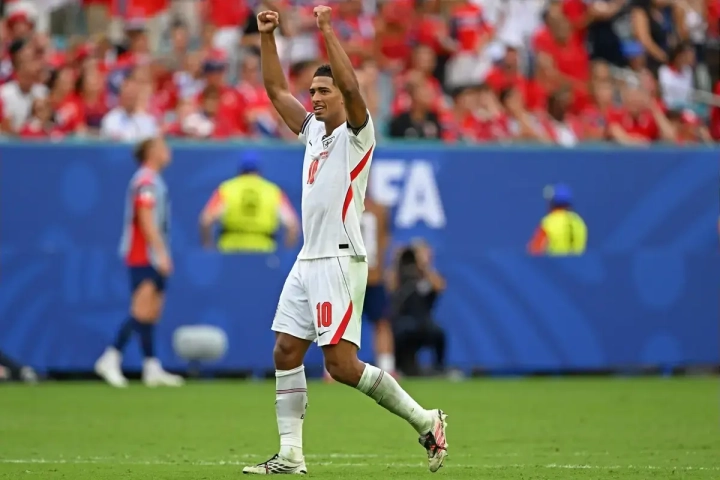
A Gripping Night in the Florida Heat
The stifling humidity of Miami Stadium provided a demanding environment for this World Cup quarter-final. Kicking off at 22:00 BST on Saturday, 11 July 2026, the encounter pitted the historic pedigree of England against a trailblazing Norwegian side making their first quarter-final appearance. When the final whistle eventually pierced the thick American night after 120 minutes of unrelenting drama, Thomas Tuchel’s men emerged victorious, securing a hard-fought 2-1 triumph after extra time.
The dramatic victory ensures their passage to the semi-finals, keeping their World Cup dream alive. Conversely, Ståle Solbakken’s courageous Norwegian outfit departs the North American continent with their heads held immensely high. Having already orchestrated a historic upset against Brazil in the previous round, the Scandinavian side pushed the reigning European heavyweights to the absolute physical and psychological limit, demonstrating that their golden generation truly belongs on the sport’s grandest stage.
Tactical Blueprints and the Clash of Elite Strikers
Pre-match narrative was undeniably dominated by a shootout between two premier marksmen: England captain Harry Kane and Norwegian talisman Erling Haaland. Prior to kick-off, Haaland boasted seven tournament goals, while Kane sat closely behind with six.
Recognising the threat, Tuchel made two significant alterations to the starting eleven that had defeated Mexico. John Stones replaced the suspended Jarell Quansah in central defence, while Noni Madueke was preferred to Bukayo Saka on the right flank. England deployed a fluid 4-2-3-1 formation, tasking Elliot Anderson and Declan Rice with anchoring the midfield and orchestrating possession.
Solbakken set his Norwegian side up in a robust 4-1-2-3 shape. Dictating the tempo through the midfield pivot of Sander Berge and Patrick Berg, the European challengers aimed to absorb early pressure and ruthlessly exploit the blistering pace of Andreas Schjelderup and Alexander Sørloth on the counter-attack, constantly looking to feed Haaland in the penalty area.
Against the Run of Play: Norway Strikes First
From the opening whistle, the overarching pattern of the encounter was abundantly clear. Monopolising territorial possession, the English side methodically probed the heavily congested Norwegian defensive block. Anderson was instrumental during these exchanges, showcasing combative qualities that have seen him lead the tournament in tackles. However, despite their overwhelming control of the ball, the Three Lions struggled to penetrate the penalty area.
Sticking rigidly to their counter-attacking strategy, the Scandinavian side absorbed the mounting pressure and looked incredibly menacing in transition. This patient, calculated approach yielded a spectacular reward in the 36th minute. Bursting explosively into the English penalty box from the left channel, Schjelderup unleashed a sensational, dipping drive. The fierce strike completely deceived goalkeeper Jordan Pickford, cannoning off the inside of the post and into the net.
The opening goal completely stunned the travelling English supporters and instantly altered the tactical complexion of the tie. Frustrations quickly boiled over, with Kane vigorously protesting to the officials, adamant that he had been illegally fouled in the build-up to the Norwegian breakaway. The referee, however, remained entirely unmoved, waving away the complaints and allowing the goal to stand.
Stoppage-Time Equaliser and the Aerial Cable Controversy
Trailing by a single goal, the 1966 champions desperately escalated their offensive intensity as the first half concluded. Their persistent attacking endeavours were eventually rewarded deep into stoppage time (45+2′), although the equaliser was heavily shrouded in bizarre controversy.
Following a Norwegian goal kick, the ball appeared to inadvertently make contact with an aerial spider-camera cable suspended high above the pitch before dropping favourably to the feet of Anderson. By the rules, play should have been immediately halted for a drop ball. However, the incident was entirely missed by the officiating crew. Play continued seamlessly, and the ball was quickly funnelled to Jude Bellingham inside the penalty area. Surrounded by Norwegian defenders, the Real Madrid superstar exhibited phenomenal composure, drilling a precise, low shot past Ørjan Nyland to level the scoreline.
Second-Half Adjustments and Crucial VAR Interventions
Tuchel initiated a decisive double substitution at the half-time interval. Bukayo Saka and Eberechi Eze were introduced into the fray, replacing Madueke and Rice. The tactical alterations injected an immediate surge of directness and unpredictability into the English forward line, stretching the Norwegian defence and creating pockets of space for Anthony Gordon to exploit.
Despite the renewed English vigour, Norway absolutely refused to capitulate. In the 56th minute, they genuinely believed they had retaken the lead. Earning a dangerous corner kick, the resulting delivery caused absolute chaos inside the six-yard box. Pickford produced an initial reaction save, but defender Torbjørn Heggem was perfectly positioned to scramble the rebound over the goal line.
The Norwegian players wheeled away in ecstatic celebration, but their joy was abruptly curtailed by the Video Assistant Referee (VAR). A pitch-side monitor review revealed Haaland had committed a clear foul on Anderson during the build-up. The referee chalked the goal off, providing England a monumental reprieve.
Sensing the shifting momentum, Solbakken turned to his substitutes’ bench to refresh his tiring flanks. Fredrik Aursnes replaced Julian Ryerson in the 59th minute, while Antonio Nusa and Oscar Bobb were introduced for goalscorer Schjelderup and Sørloth shortly afterwards. Tuchel responded by bringing on Reece James for Gordon, seeking to solidify the right side of his defence against the newly introduced Norwegian pace.
Bellingham’s Extra-Time Heroics
As the physically draining encounter entered its final stages, the searing Florida heat began to take a visible toll on both sets of players. Mandatory hydration breaks provided brief moments of respite, but the tempo inevitably slowed. Tuchel introduced Djed Spence and Morgan Rogers in the dying embers of normal time, while Norway brought on Leo Østigård, but neither side could find a decisive breakthrough before the ninety minutes elapsed.
The exhausting prospect of extra time demanded immense reserves of stamina and mental fortitude. Barely three minutes into the first period of additional time (93′), the defining moment of the quarter-final arrived. Initiating a swift, sweeping attacking transition, England ruthlessly dismantled the exhausted Norwegian rearguard. Finding a precious pocket of premium space, Bellingham arrived perfectly on cue to collect a pass and rifle a sensational finish past the helpless Nyland, completing his match-winning brace and sending the English bench into absolute delirium.
Late Drama and Sealing the Victory
The drama, however, was far from concluded. In the 101st minute, the referee pointed directly to the penalty spot, seemingly offering England a golden opportunity to put the tie entirely to bed. Yet, following another lengthy VAR intervention, the decision was dramatically overturned, keeping Norwegian hopes faintly alive.
Desperately throwing caution to the wind, Solbakken made the incredibly bold decision to substitute the fatigued Haaland for Jørgen Strand Larsen in the 105th minute, hoping the fresh legs could salvage a miraculous equaliser. Tuchel pragmatically responded by introducing towering defender Dan Burn for the exceptional Bellingham, shifting into an ultra-defensive shape to protect the slender advantage.
The closing fifteen minutes were characterised by a desperate, frantic Norwegian siege on the English penalty area. Frustrations frequently boiled over, culminating in a 116th-minute yellow card for Norwegian defender Kristoffer Ajer following a heavy challenge. Despite launching wave after wave of aerial bombardments, the Scandinavian side simply could not breach the resolute defensive partnership of Stones and Marc Guéhi for a second time.
Tournament Implications and the Road Ahead
When the final whistle blew, relieved English players collapsed to the turf in exhaustion, while their heartbroken opponents shared tearful embraces. Jude Bellingham was universally praised for his talismanic performance, deservingly claiming the Player of the Match accolade for his two crucial goals.
This monumental 2-1 victory guarantees England a highly coveted place in the World Cup semi-finals. Having survived a severe examination of their championship credentials, Tuchel’s squad will now embark on a highly anticipated journey to face either Argentina or Switzerland for a spot in the grand finale.
For Norway, the devastating reality of the late defeat leaves them reflecting on a monumental missed opportunity. Nevertheless, they depart the global showpiece having provided one of the most compelling, inspiring narratives of the entire tournament. Pushing one of the pre-tournament favourites to the absolute limit serves as a powerful testament to their immense growth, and they return to Europe fully aware they have established a solid foundation for the future.
Official Match Facts
| Area | Match Detail |
| Competition | FIFA World Cup 2026 – Quarter-Finals |
| Venue | Miami Stadium, Florida |
| Date | 11 July 2026 |
| Kick-off Time | 22:00 BST |
| Final Score | Norway 1 – 2 England (AET) |
Goalscorers:
Norway: Andreas Schjelderup (36′)
England: Jude Bellingham (45+2′, 93′)
Discipline:
Norway: Kristoffer Ajer (Yellow Card, 116′)
England: None
Key Match Events:
56′ – VAR Intervention: Goal disallowed for Norway (Torbjørn Heggem) due to foul in build-up.
101′ – VAR Intervention: Penalty awarded to England reversed.